

Dhamma teacher : ค้นหาหนังสือธรรมะ หน้า 2 / 8
หน้าหนังสือทั้งหมด
16
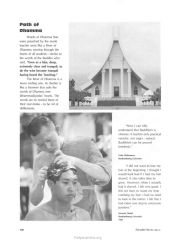
เส้นทางแห่งธรรม
Path of
Dhamma
Words of Dhamma that
were preached by the monk
teacher were like a River of
Dhamma running through the
hearts of all students - similar to
the words of the Buddha who
said, "Even as a l
Path of Dhamma Words of Dhamma that were preached by the monk teacher were like a River of Dhamma running through the hearts of all students - similar to the words of the Buddha who said, "Even as a l
28
Uggasena's Exhibition in Rajagaha
The residents of the city caused platform above platform to be erected and assembled on the seventh day.
Uggasena climbed a pole sixty cubits in height and balanced himself on the top of it.
On that
In Rajagaha, Uggasena impresses the crowd with remarkable balancing feats on a pole. As the Teacher observes, he realizes that this display will lead to the enlightenment of many, including Uggasena h
32
The Teachings of Letting Go
So saying, he sprang into the air from the top of the pole, turned fourteen somersaults in the air, and alighting on his feet, balanced himself once more on the tip of the pole. The Teacher said to hi
In this passage, a man named Uggasenā demonstrates the importance of letting go of attachments to the past, present, and future. The Teacher advises that true wisdom comes from releasing oneself from
23
Untitled
meditation outside the temple. Chandra had intended from the start to practise meditation with the teacher and hearing the news that she would soon visit the household again, Chandra was filled with j
No content available for summary creation.
41
Understanding Dhammakāya: A Scholarly Interpretation
Points to Consider
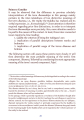
It may be observed that the difference in previous scholarly interpretations of the term dhammakāya in this passage mainly pertains to the inter-relatedness of two distinctive meani
This text delves into scholarly interpretations of the term 'dhammakāya', emphasizing the need for a nuanced understanding of 'dhamma' as both a realized reality and a verbal expression. It identifies
58
Understanding the Concept of Body and Collection in Dhamma
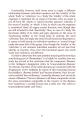
Functionally, however, both terms seem to imply a different relationship between individual members and the ‘totality’ of the whole ‘body’ or ‘collection.’ As a ‘body,’ the ‘totality’ of the whole org
This text analyzes the distinctions between the terms 'body' and 'collection' within the framework of Dhamma, particularly focusing on functional dependence. It argues that while a 'body' maintains es
81
Understanding Dhammikāya in Buddhist Philosophy
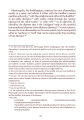
Dhammapāla, like Buddhaghosa, employs the term dhammikāya
mostly as a noun, and relates it either with the Buddha’s mental
qualities and purity,134 with the Enlightenment either of the Buddha135
or hi
Dhammapāla discusses dhammikāya, relating it to the Buddha's mental qualities and Enlightenment. This term connects the Buddha's teachings and truths, illustrating his purity and extraordinary qualiti
108
Understanding Defilements and Dhamma in Buddhism
Meticulous with a Dharma Messenger
If we are not mindful, then defilements become even more apparent to us. We must bring together concentration, effort, and meditation. They must all come together.
This text delves into the importance of mindfulness to combat defilements and achieve purity through meditation. It emphasizes the synergy of concentration, effort, and mindfulness. The Buddha's journ
67
Understanding Dhammakāya in Relation to Paccekabuddhas and Enlightenment
early texts that 'dhammakāya' must be singular. 100 In any case, the verse conveys the meaning that a Paccekabuddha has dhamma(s) as his body (or bodies), where 'dhammas' refers to the qualities perta
This study analyzes the term 'dhammakāya' and its relation to enlightenment. Dhammakāya is presented as a singular concept applying to both the Buddha and Paccekabuddhas, emphasizing that 'dhamma' ref
114
Meetings with a Dhamma Master
Meetings with a Dhamma Master
systemized, or categorized, the Dhamma, and he was able to individualize the lessons so
that the people He was talking to would have the ears to hear, and the wisdom to
In 'Meetings with a Dhamma Master,' the importance of individualized Dhamma teachings is highlighted. Just as the Buddha demonstrated patience with his students, teachers today must equally nurture ea
53
Understanding Dhamma and Nibbāna in Buddhism
With regard to dhamma as the 'essence' of the Buddha and Arhat disciples, however, it may be more appropriate to refer to 'Nibbāna,' for once they have attained Buddhahood and Arhatship their spiritua
This text explores the concept of dhamma in relation to the Buddha and Arhat disciples, particularly the notion of Nibbāna as the essence of their enlightenment. It argues that dhamma, especially in t
61
Exploring the Concept of Dhammakaya
First, as a *kammadhāra* compound, the translation of the term *dhammākāya* will be ‘the body that is transcendental (lokuttara) dhamma’ or ‘the body that is Nibbāna.’ This gives a similar sense as th
The term Dhammakaya can be viewed in two ways: as a kammadhāra compound translated to mean 'the body that is transcendental dhamma' or as a tappurisa compound meaning 'body pertaining to transcendenta
112
Understanding Inner Dhamma
Inner Dhamma
We used to perceive that the inner Dhamma was something profound and difficult to attain, that one had to put in an immense amount of effort and had to do it in a remote place in order to
Inner Dhamma was once seen as a profound, difficult achievement requiring immense effort in isolation. However, it is now understood that maintaining an alert, relaxed, and still mind allows access to

57
การสัมภาษณ์นักท่องเที่ยวชาวอังกฤษ
An interview was conduct and edited
by suwanee srisopa
A BUDDHIST
VISITOR FROM
ENGLAND
"Practising Dhamma
brings you happiness."
In practising Dhamma, one will
certainly get in return the insight know
ENGLAND "Practising Dhamma brings you happiness." In practising Dhamma, one will certainly get in return the insight know- ledge known particularly to oneself. This signifies that after Dhamma study,
50
Journey to Dhamma: A Personal Transformation
ERVICE
merits. If I had huge problems, I would make huge
merits. This was how I learned about Wat Phra
Dhammakaya in 2001, under the guidance of a good
fellow (kalyanamitta) from Korat who suggested t
This text chronicles a personal journey of spiritual growth, initiated by the author's experiences at Wat Phra Dhammakaya and the DMC program. From the suggestion of a friend, the author contributed t
33
การบรรยายเกี่ยวกับการทำสมาธิ
tion. I then have a soft drink and
go to bed sometime between nine
and
ten."
An Impressive
Temple
The place where we live will
be really comfortable or not depend-
ing on whether it possesses the
foll
Temple The place where we live will be really comfortable or not depend- ing on whether it possesses the following four characteristics: (i) to live in a society which practises Dhamma (ii) people to
46
The Journey of Kala and the Pursuit of Dhamma
Therefore he remained and continued to listen. Kala listened to the Dhamma with a firm resolution to learn; but the Teacher, as before, caused him to misunderstand the true meaning. 'I will master the
In this narrative, Kala demonstrates a strong resolve to learn the Dhamma, yet faces challenges in understanding its true meaning. His encounter with the Teacher leads him to strive for mastery of a s
29
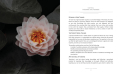
Training the Trainer: Defining a Good Trainer
CHAPTER 3
TRAINING THE TRAINER
DEFINING A GOOD TRAINER
To teach to a high standard requires a sound knowledge of the body, the mind, kilesa and baap as previously defined. From this basis teachers ar
บทที่ 3 ลงลึกในความสำคัญของการฝึกอบรมครู เพื่อสร้างแบบอย่างที่ดีในการสอน ความรู้เกี่ยวกับร่างกายและจิตใจเป็นพื้นฐานสำคัญ ผู้ที่เป็นครูที่สมบูรณ์จะต้องเป็นแบบอย่างที่ดีในด้านคุณธรรมและจริยธรรม โดยสามาร
60
The Uncertainty of Rebirth and Knowledge
"Reverend sir, you yourself know that I was going to the weaver’s workshop with my shuttle-basket in hand.
So when you asked me, ‘Where are you going?’ I knew very well that your meaning was, ‘When
In this dialogue, the Teacher questions a woman about her understanding of rebirth and death. She expresses her awareness of her mortality but acknowledges her ignorance regarding the specifics of her

65
เรื่องราวของสองสหายในธรรมบท
T
KANLAYAN
ANAMIT LETTERS FRO
T LEVERS FROM KANLAYANAMI
OM KANLAYANAMI, LETTERS FROM KANL/
MIT LETTERSOM KANLAYANAMIT LETTERS FROM
FROM KANL
KANLAYANAM
T LETTERS
M_KANLAYA)
ETTERS FROM
YANAMIT LE/
LET
T KANLAYAN ANAMIT LETTERS FRO T LEVERS FROM KANLAYANAMI OM KANLAYANAMI, LETTERS FROM KANL/ MIT LETTERSOM KANLAYANAMIT LETTERS FROM FROM KANL KANLAYANAM T LETTERS M_KANLAYA) ETTERS FROM YANAMIT LE/ LET